

Preliminary Reports
PHOENIX-UASL
➤ Preliminary Reports
First year
II report V-VIII months (Reporting Period: January–April 2026)
Project management, coordination and scientific development
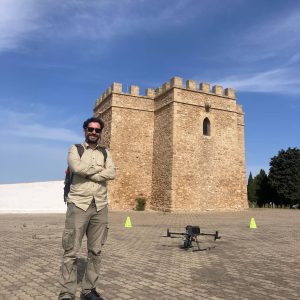
Antonio Pecci at the archaeological site of Castillo de Doña Blanca (photo by Antonio Saponara)
During the second reporting period, the PHOENIX-UASL project entered a more advanced operational phase characterized by the consolidation of research methodologies, the implementation of UAV–LiDAR activities, and the strengthening of international scientific collaboration and training activities.
Continuous project coordination and scientific planning were carried out in close collaboration with the supervisor, the Phoenix Mediterranea research group, and the Servicio de Drones of the Universidad de Cádiz. Regular technical meetings and collaborative discussions focused on the development of remote sensing methodologies, LiDAR data acquisition strategies, and the integration of archaeological, topographic, and spatial datasets within the project framework.
A significant part of the reporting period was also dedicated to the preparation of the official MSCA Postdoctoral Fellowship continuous reporting deliverables, including the Data Management Plan (DMP) and the Career Development Plan (CDP). These activities contributed to strengthening the organizational structure of the project and defining long-term scientific, methodological, and professional objectives.
Research activities, UAV–LiDAR operations and fieldwork
Research activities during the second quadrimester focused extensively on the implementation and application of advanced non-invasive methodologies for archaeological investigation, particularly UAV–LiDAR technologies and GIS-based landscape analysis.
At the archaeological site of Castillo de Doña Blanca, extensive GIS-based spatial analysis activities were conducted through the development of a comprehensive digital archaeological mapping project using QGIS. The work included the integration of excavation plans, historical cartography, orthophotos, digital elevation models, and geophysical datasets, aimed at preparing analytical layers for the future integration and interpretation of LiDAR data.
Although adverse meteorological conditions during January and February temporarily prevented the execution of planned UAV–LiDAR flights, activities were redirected toward analytical work, bibliographic research, technical planning, and data processing.
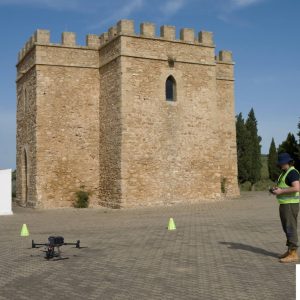
From March onward, favorable weather conditions finally allowed the successful execution of the first UAV–LiDAR flight operations over Castillo de Doña Blanca and its surrounding landscape, carried out in collaboration with the Servicio de Drones of the Universidad de Cádiz. These activities represented a major milestone within the project and constituted the first high-resolution LiDAR acquisition campaign specifically developed for the archaeological analysis of the site and its fortified landscape.
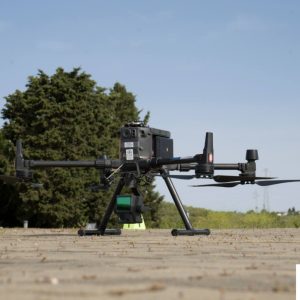 Screen of the aerial work at the archaeological site of Castillo de Doña Blanca (photo by Antonio Saponara) |
 |
Additional bibliographic and technical research focused on LiDAR technologies, remote sensing methodologies, archaeological landscape interpretation, and data acquisition strategies applicable to Phoenician–Punic archaeological contexts.
Fieldwork activities also continued at Castillo de Doña Blanca through participation in the archaeological excavation campaign conducted between 8 and 30 April 2026, particularly within the northern gate sector of the fortified settlement. The excavation activities contributed directly to the interpretation of the fortification system and the broader urban organization of the site.
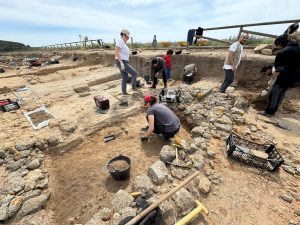
The UCA team during excavations at Castillo de Doña Blanca (photo by Pablo Sicre González)
Complementary historical–archaeological analyses were carried out through a technical visit to the Cueva Cantera of the Sierra de San Cristóbal (El Puerto de Santa María), aimed at improving the understanding of local geological resources and ancient quarrying activities potentially connected to the settlement and its defensive architecture.
International mobility, training and professional development
The second reporting period was characterized by intense scientific mobility and professional development activities.
An important academic and research trip to Italy was carried out together with the supervisor and members of the Phoenix Mediterranea research group. The mobility activities focused on the analysis of innovative approaches to archaeological heritage management, public archaeology, accessibility strategies, museography, digital dissemination, and fortified archaeological landscapes.
Within this framework, Antonio Pecci participated in seminars and scientific meetings organized in collaboration with the Università degli Studi della Basilicata and the Scuola di Specializzazione in Beni Archeologici di Matera, dedicated to Phoenician archaeology, archaeological methodologies, and heritage communication.
Technical and scientific visits were conducted at several archaeological parks, museums, and cultural institutions, including the Pompeii Archaeological Park, Parco Archeologico di Paestum e Velia, Parco Archeologico di Siris-Herakleia, Reggia di Caserta, Museo Archeologico Nazionale della Siritide, and Museo Provinciale Campano.
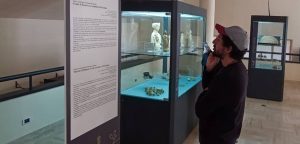
Antonio Pecci at Museo Archeologico Nazionale della Siritide di Policoro
These activities focused particularly on accessibility strategies for visually impaired visitors, tactile and tiflological resources, augmented and virtual reality applications, immersive dissemination methodologies, and innovative approaches for archaeological communication and knowledge transfer.
Professional development activities further included participation in the international workshop “Far from the city: fortifications and organisational models on the margins of traditional historiography”, hosted by the Royal Netherlands Institute in Rome (KNIR), as well as participation in the InnoNext Info Session 2026 dedicated to European innovation ecosystems and intersectoral mobility opportunities.
Teaching activities were also carried out within the Máster Universitario en Patrimonio, Arqueología e Historia Marítima at the Universidad de Cádiz, including lectures within both the module “La Interdisciplinariedad en Arqueología” and the course “Práctica de Campo”.
Scientific dissemination and academic activities
Scientific dissemination activities intensified significantly during the second quadrimester.
Antonio Pecci participated in several scientific conferences and academic initiatives related to archaeological remote sensing, digital archaeology, and Phoenician–Punic studies.
During the reporting period, two contributions submitted to the 11th International Congress of Phoenician and Punic Studies (Valletta, Malta, November 2026) were officially accepted. In addition, the contribution submitted to the XXI Congreso de la Asociación Española de Teledetección (AET), Cáceres 2026, was also accepted.
Participation in the ERC Proposal Reading Days 2026, organized by the Universidad de Cádiz, provided further training opportunities concerning European Research Council proposal strategies and evaluation procedures. In add, the researcher participated in the international science communication event Pint of Science 2026 (Cádiz, 19 May 2026), through a public lecture entitled: “Drones y LiDAR en el paisaje histórico de Cádiz”, aimed at disseminating the social and scientific value of archaeological remote sensing technologies to a non-specialist audience.
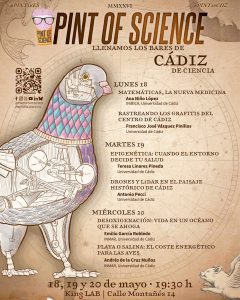
Poster of Pint of Science 2026 (Cádiz, 18-20 May 2026)
Communication, outreach and digital dissemination
Communication and outreach activities continued throughout the reporting period through the constant management and updating of the official PHOENIX-UASL digital platforms and social media channels.
The official project website, Phoenix UASL project website, continued to function as an open-access dissemination platform for communicating research objectives, methodologies, fieldwork activities, preliminary results, and public engagement initiatives.
Regular dissemination activities were conducted through the project’s official social media accounts on Instagram, X (formerly Twitter), and Facebook, including updates related to UAV–LiDAR operations, archaeological excavations, scientific events, conferences, and outreach activities.
Public engagement activities included participation in science communication initiatives and dissemination events aimed at non-specialist audiences, contributing to the public understanding of archaeological research and innovative remote sensing methodologies.
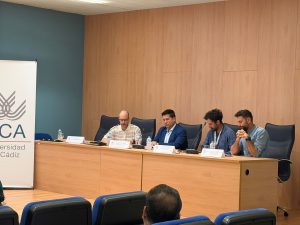
Finally, Antonio partecipated in the International Staff Training Week Programme – Empowering International Researchers through European Funding Opportunities, organized by the Universidad de Cádiz (19–21 May 2026), including participation as speaker in the roundtable entitled: “Experiences and Success Stories in ERC, MSCA-PF and MSCA-DN”.
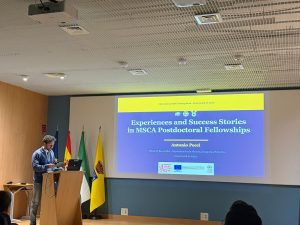 Image from International Staff Training Week Programme – Empowering International Researchers through European Funding Opportunities (Cádiz 19-21 May, 2026) |
 |
Summary of progress
Overall, the second reporting period marked the transition of the PHOENIX-UASL project from its initial setup phase toward full operational implementation. Major progress was achieved in the execution of UAV–LiDAR activities, GIS-based archaeological analysis, scientific dissemination, international collaboration, and professional development.
The successful completion of the first UAV–LiDAR acquisition campaigns at Castillo de Doña Blanca represented a major scientific and methodological milestone for the project. At the same time, extensive dissemination, mobility, and networking activities significantly strengthened the interdisciplinary and international dimension of the research action.
All planned activities for the reporting period were successfully implemented, and the project remains fully aligned with its scientific objectives, methodological framework, dissemination strategy, and training goals.
I report I-IV months (Reporting Period: September–December 2025)
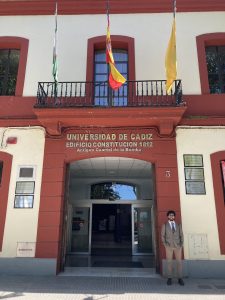
Antonio Pecci at the Department of History, Geography and Philosophy, University of Cádiz (photo by Ida Campanile)
Project management, coordination and integration
During the first four months of the action, Antonio Pecci successfully completed all administrative, institutional, and logistical procedures required for full integration into the Universidad de Cádiz. These included personal administrative formalities and access to university services, research facilities, and academic structures.
Project planning and coordination activities were initiated and continuously developed in close collaboration with the supervisor. Regular meetings and ongoing bidirectional communication with the Phoenix Mediterranea team, the excavation staff, and the research mission ensured effective alignment between project objectives, methodologies, and planned activities. This phase focused on establishing a solid organizational and scientific framework for the action.
Research and fieldwork activities
Research activities commenced with extensive bibliographic research relevant to Phoenician–Punic archaeology, fortification systems, and the application of unmanned aerial systems in archaeological contexts. Part of this research was conducted during a short research period in Italy.
Antonio Pecci actively participated in archaeological fieldwork at the Doña Blanca site, contributing to excavation activities, geophysical surveys, and drone-based photogrammetric documentation of the excavation area, with particular emphasis on the northern fortification walls. These activities directly supported the research objectives of the project.
Dedicated coordination meetings were held with the Servicio de Drones of the University of Cádiz to plan, schedule, and program drone flight operations, laying the groundwork for the integration of advanced remote sensing techniques into the project.
In addition, focused scientific discussions were conducted with David Montanero Vico (Institut Català d’Arqueologia Clàssica) on Phoenician fortification theory and practice, contributing to the conceptual and interpretative framework of the research.
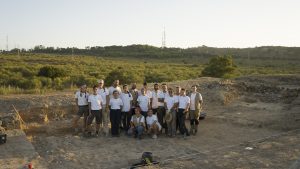 The UCA team engaged in the 2025 excavation campaign at the Doña Blanca site (photo by Pablo Sicre González) |
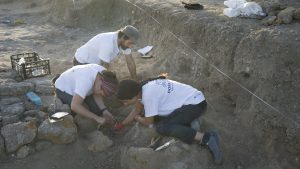 Image from the excavation of the archaeological site of Doña Blanca (photo by Pablo Sicre González |
Training and skills development
During the reporting period, Antonio Pecci attended a Spanish language course (B1 level) at the UCA Language Center, successfully passing the final examination. This training supported effective communication, institutional integration, and participation in field and academic activities.
Complementary training activities included the completion of a 16-hour online course on artificial intelligence tools and prompt strategies for research, enhancing methodological and digital research skills relevant to data analysis and innovation within the project.
Professional development was further strengthened through participation in the International Workshop “United by the Atlantic: Identifying Synergies for the Study of Archaeological Heritage” (University of Cádiz, November 2025), where Antonio Pecci delivered an oral presentation entitled “PHOENIX-UASL: Research on Phoenician–Punic Sites in Andalusia Using an Experimental Unmanned Aerial System with LiDAR”.
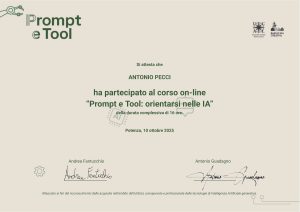 Certification of course on artificial intelligence tools and prompt |
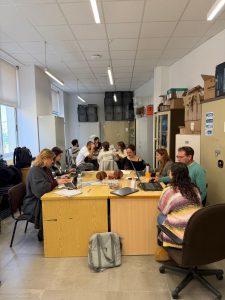 Image from International Workshop “United by the Atlantic: Identifying Synergies for the Study of Archaeological Heritage” (University of Cádiz, 28 November 2025) |
Communication, dissemination and exploitation
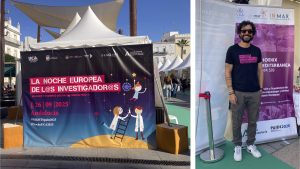
Images from the European Researchers’ Night (San Fernando, Spain, September 2025)
Significant efforts were dedicated to communication and dissemination activities. Antonio Pecci developed advanced digital skills through training in WordPress and created the official project website (Phoenix UASL), providing an online platform for project visibility and public communication. Official project social media accounts were also established on Instagram, X, and Facebook.
Public engagement activities included active participation in multiple events during La Noche Europea de los Investigadores, involving workshops, educational activities, and open days related to Phoenician archaeology and the Doña Blanca site.
Further dissemination actions comprised a newspaper interview published in La Voz del Sur, and a radio interview broadcast on Canal SUR Radio (“Andalucía Ahora”), contributing to increased visibility of the project and its innovative methodological approach.
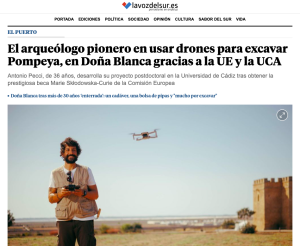 Screen from press interview published in La Voz del Sur |
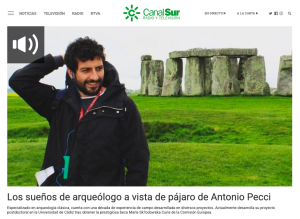 Screen from the webpage of radio interview broadcast on Canal SUR Radio, programme “Andalucía Ahora” |
Summary of progress
Overall, the first four months of the action were dedicated to project setup, training, initial research and fieldwork, and the establishment of a strong dissemination and communication strategy. All planned activities for the reporting period were successfully implemented, and the project is fully on track with respect to its objectives, work plan, and training goals.